Does your institution need a water filter?
2 December 2025
Find out why your school, hospital, or office needs a water filter in 2025 to ensure clean and safe water.
Drinking water, yes…from the city aqueduct to your water supply pipes, but then?
In Canada, we are fortunate to have some of the best drinking water in the world. In Ontario and Quebec, quality is regularly checked to ensure consumer safety.
However, the situation changes as soon as water enters your building’s internal network. Depending on the age and state of your internal waterways, you could have unpleasant surprises. A water filter can change all that! Do you think you might need a lead reduction water filter? Or perhaps you’d like to get a water filter that filters PFAS from your drinking water? Let’s have a look…
Fun facts about our infrastructures
- The average age of schools in Canada is 49 years, according to the “National Center for Education Statistics.”
- The oldest school in Canada is in New Brunswick, Saint John High School, created in 1805!
- The very first hospital to be built in Canada is the Hôtel-Dieu, founded in 1637 in Quebec City and still in operation!
- It was in the 70s that the construction of large-scale hospitals experienced a significant boom. This is why many of our infrastructures date from that time.

If several have undergone renovations over the years, you can easily imagine the state of the network supplying drinking water in these establishments.
Is lead hiding in your building?
Lead was banned in 1975 in the piping used to supply drinking water, but its use continued until the end of the 1980s. Cities aim to eliminate all lead-containing pipes by 2032. If your building predates the 90s, it is strongly recommended to assess the situation.
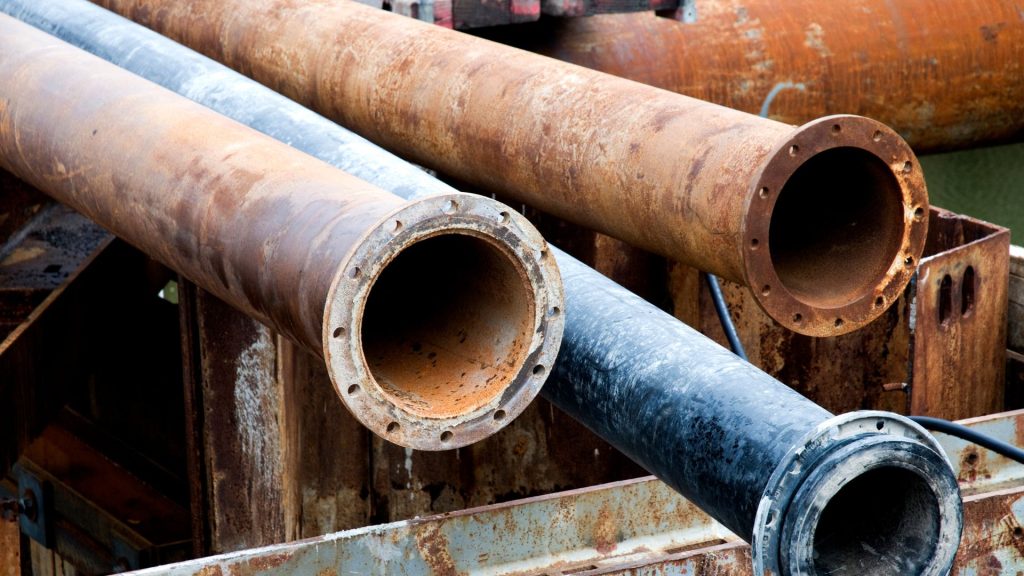
Replacing piping is ideal, but expensive and complex. Installing water filters on your distribution points is a cost-effective solution, very easy to implement, and will make a big difference for the health of users.

Schools, hospitals, offices: what’s the actual risk?
Schools, hospitals, and government buildings built decades ago are particularly vulnerable.
Since the vast majority of these buildings serve a fragile clientele, such as patients or children, water quality is particularly important.
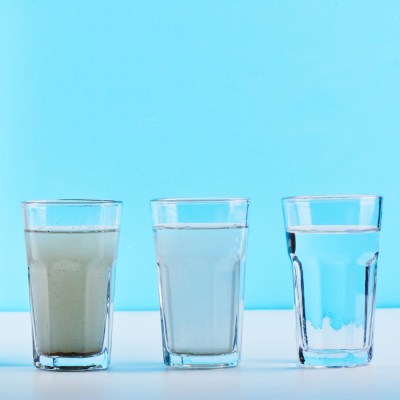
A water filter will prevent metal particles and contaminants from entering your water coolers and bottle fillers.
Several fountains are now sold with a water filter included. If your current equipment does not have one, it is almost always possible to add one. It is a simple solution to ensure pure and pleasant drinking water.

Protecting health : what could be hiding in the water
LEAD
Lead, present in small quantities in air, water, soil, and some manufactured products, in greater concentrations can be harmful to health. Exposure is generally low, as municipal drinking water is well controlled. Contaminations often come from the waterways of buildings. Although the body removes a large portion of lead, high levels result in an accumulation in organs such as the liver, pancreas, and kidneys. Pregnant women, newborns, and young children are particularly vulnerable.
PFAS
PFAS are very harmful synthetic chemicals, present in many products: food packaging, waterproof clothing, and non-stick utensils. They contaminate water, whether it is drainage water or drinking water. Their elimination requires specialized filters.
BACTERIA
Microorganisms such as viruses, bacteria, and protozoa can be found in water. Some, such as E. coli, cause disease (Institut National de Santé Publique du Québec). We distinguish between microorganisms of fecal origin and those naturally present in the environment. Some serve as indicators of microbiological quality. In sensitive environments (hospitals, care centers, schools), it is essential to reduce these risks. Specific filters and UV-C lamp sterilization are effective solutions.
What kind of water filtration do you require?
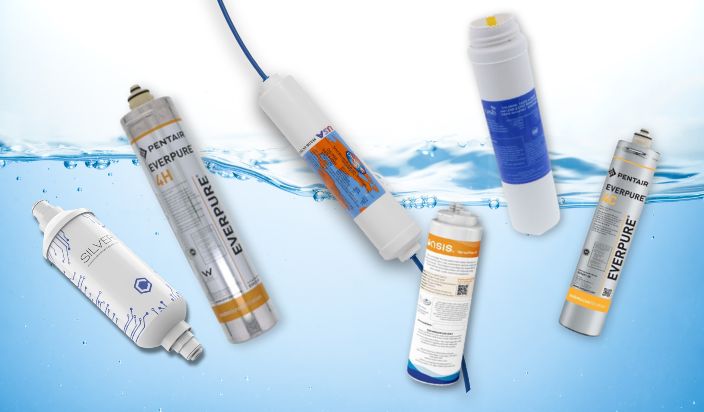
Water filters can filter lead, limestone, cysts, PFAS, and microplastics, dirt and sediments, microparticles, and some can filter micro-organisms such as E.Coli. A UV-C radiation LED lamp can be installed in conjunction with a water filter to ensure pathogen-free drinking water.
The majority of water filters are able to reduce chlorine smell and greatly improve taste. Systems also offer reverse osmosis filtration, extremely efficient to make the water of unequaled purity.
Need help?
Do you wish to replace your fountains with models offering advanced filtration? Need help choosing the right water filter? Fortunately, we are specialists!
We can guide you to the right choice of water filter and even take care of maintenance and replacement of filters for you. Turnkey plans exist to simplify the management of your water quality. Single unit available for purchase or in an economical pack of several units, you can also negotiate a volume price. Ask about it!
Contact one of our representatives, and we can check with you what you need. 1-866-660-2858